Wednesday, September 22, 2010

Sensex Crossed 20K Again! Nifty Crossed 6K

Indian benchmark Index Sensex (BSE) crossed the good old mark 20K. This is second time and being a large number of points it is an important mark.
Today's Sensex chart (long term with 200DMA, 50DMA & 20 DMAs)
sensex crossed 20000 points again 2010
NIFTY (NSE Index) too is on a good course and crossed its 6K mark.
Today's Nifty chart (long term with 200DMA, 50DMA & 20 DMAs)
Nifty crossed 6000 points again
As the charts show the market is clearly in a good uptrend. The indices are above all the three moving averages. With respect to 20 day moving average it is clear that the indices made the decisive move upwards. There will be resistance expected upwards. That's what the experts will say. But its the momentum that keeps them going.

When the markets have just broke out we should not doubt the strength. However this move lacked market breadth. That means it is the usual FIIs that are fuelling this move. There is nothing new in that. It might just happen that the indices gain broader market support with time. That is the kind of time when traders who follow new high stocks make good money.
Continue reading...

Saturday, August 7, 2010

The Return of the Stock Trader (Pipavav Shipyard, Thangamayil Jewellery)

After hibernating from trading stocks for a really long time (about two years), the stock trader has made return. However this time there isn’t much excitement or enthusiasm as it was before. But there is a cautious and serious attitude to take the best returns the stock market has to give.

Since the time I wrote the post “Does a Share Trader undergo Hibernation?” I haven’t traded stocks and kept away from the market missing the golden opportunities available. I did not become a fool nor did I frighten so much. But I got the confidence that we can trade for profit in any trend but also fear that we should trade with the trend and with caution for losses have the potential to change our lessons learned and attitude towards the market. To make comeback I told myself to stick to simple strategies and only trade on long or intermediate trends.

A few weeks back I bought a book “Stock Market Trading Rules: Fifty Golden Strategies” by William F. Eng from Sapna Book House. I found it a year back but I didn’t buy due to high cost. As I couldn’t buy it anywhere else I bought it this time. It took almost a year to find it again in the same Sapna Book House.


This book helped me rejuvenate my interest to trade stocks. It has wonderful rules formulated from already taught rules and from personal experience of the author. This is very valuable book for me. It taught me something I wasn’t able to crystallize on my own. The author summarizes that in simple words in RULE 50:
“Control what you can
Manage what you cannot

The following are items that the trader can, and must, control:
  • The amount of money put into the markets.
  • The amount of markets to follow.
  • When to enter a trade.
  • How to enter a trade.
  • When to exit a trade.
  • How to exit a trade.
  • How to spend one’s time.

The following are items over which the trader has absolutely no control:
  • The direction markets will move.
  • The duration of the markets’ movements.”

This book helped me to start trading again with renewed confidence, hope and reduced fear. I had been in Goldbees for almost half a year. So I just upped my capital a month back when Gold prices pulled back. Goldbees is scrip name of Gold Benchmark Exchange Traded Fund and it costs the same brokerage price as trading stocks. I didn’t consider this as a trade as it was a really long term investment and also I was not fully in it yet. But as I take the suggestion of many experts that Gold will rise to double or triple its value in the last year, I am in for it.

Goldbees Long Term Chart
Goldbees long term trend August 07, 2010

One of the important lessons I learned from the past few years is that the bear markets don’t last for long time though they do more damage in short time. I knew that stocks fall or retreat downwards faster than they go up. But it was also held well in the worst bear market. The worst bear market lasted only five months in 2008. Rest of the time market stayed in range trading and upwards trends.

Also my best profits are made while sitting tight and looking for long range bets. Short range and short term trading is certainly most attractive and lure everyone into its trap. But the problem is that you need to be consistent in trading. For the time we spend it is not worth doing short range trades but go for long range trade even if it takes long time to get the profit. My past shows me that those are the best trades and gave me most happiness.

Nifty Long Term Chart (it is called bull market :D )
Nifty long term trend August 07, 2010

One day I sat down and made a list of all stocks making new highs from the Economic Times online edition. There were too many but I took about four from each day till 10 days backwards. That means to capture as many stocks as possible different in their timelines. Now I watch this list every day or two. So I had noticed these two stocks Thangamayil Jewellery and Pipavav Shipyard. The market itself was in good long term trend as it was above 200-day moving average (green line on charts). From past experience it was easy to see how easy it is to make profits now on these stocks.

Thangamayl Long Term Chart
Thangamayil Jewellery long term trend August 07, 2010

Pipavavyd Long Term Chart
Pipavav-Shipyard long term trend August 07,2010

The two stocks have made pullbacks from their recent highs and are shrinking in their daily range. That was to form a base pattern before breaking it above or below. Pipavav’s chart reminded me of symmetrical triangle pattern and I made an entry before it is too late at the price of 97.8. I waited for two weeks after buying on a Friday. By this Friday (yesterday) the stock is now up by 8%.

Pipavav Shipyard Symmetrical Triangle Pattern
Pipavav Shipyard symmetrical triangle chart pattern

Of course it happened in two days only. That is the way of these stocks making into new high lists of market statistics. Same was the case with my biggest loser SELMCL in which I entered too late. But it is better to get in early and wait than to miss it and chase it. However I was placing stop losses almost every day since I positioned in this stock.

Thangamayil too made a 10% upmove in the last two days. I wanted to enter this just to diversify to increase chances of profit but I wasn’t short of time so I didn’t diversify. I could wait as long as they take to make their move.

As stocks move in your favor there will be some change in your thinking. Before this I had very low risk appetite. It was bad to be like that in a bull market trend. Hence one profitable trade is needed. The risk taking appetite rises with consecutive profitable trades. When it gets too large we should give it a break. Otherwise things can turn around. I feel that now I can give all the time that the market demands.


Continue reading...

Tuesday, June 1, 2010

The Second Wave of Great (Deep) Recession is Around the Corner

The much awaited second wave of great recession is around the corner. The first wave started with a sudden shocking wave coincident with local problems (Relpower finance, Weekend holidays and late morning opening times for banks) and global causes (Powershow of FIIs in shaking markets). It ended finally like a bloody war ends, with many interesting events along the way (Oil prices flare-up, Russia correcting Georgia, finishing touch with year-end quarter meltdown). Of all, the most memorable was the September-October meltdown that rocked all businesses worldwide. Life was never the same. Everything became 1/3 :-).

The sudden tsunami wave on Jan 22 2008 had suggested the depth of the then upcoming recession. Many analysts announced that it would be worser than the Great Depression of the past century. That meant that it won’t be like a small recession in a growing economic scenario. That is why it will have its own waves or trends and counter trends. The first wave has passed (2008) and also the first counter trend (last year’s intermediate bull market trend or temporary economic growth).

There is an Elliot Wave Theory on stock market movements. This theory talks about five waves in a particular trend. In those five three will be in the same trend and two will be counter trend as illustrated in the figure. It is also showing three more waves after the peak.

second wave of recession, elliot waves, stock market movements
Elliot Wave Illustration (cc-licensed image)

Basically we can take two ideas from this. That is, a particular trend once established gets completed in three in-trend waves with two counter-trend waves of lesser strength separating each of them. And the counter wave moves the market back less than the in-trend wave moves it. That is retracements or pullbacks won’t exceed the damage or growth done by the initial moves. If they do that indicates trend reversal and more strength in the counter trend so that it establishes a new trend.

When recession appeared to start in January 2008 it was thought of as a healthy normal correction like any other time in the past few years before 2008. The stocks in mid December 2007 to first week of 2008 were all skyrocketing. Dummies too got a life. Too many stocks were making into the list of 52-week highs. Unfortunately I didn’t realize what I was witnessing. That was the peak of the bull market (in other words like Everest for a mountaineer). Even if you had traded stock after stock with strict stop losses making sure to trade as many stocks as possible you would have made all the money that the same capital would have earned in long term trades in the three years of bull market before that month.

I just guessed that this (great) recession would be a nine month recession like a temporary counter trend in a long term bull market trend. But things changed (or became apparent) rapidly in 2008. Then I had to expect a nine month growth period (counter trend in a long term bear market) after the first wave. This trend started with its own shocking wave (should I say so - on May 18 2009, UPA winning India’s elections) and revived all the stock broking businesses by now. It must have been a good ride for those who had participated in it (as the stats show).

Like the sequel of a movie series I don’t expect the same action/thrill in the second wave as it was in the first wave. As the governments over the world have intervened in the way of the economic recession to maintain the status quo of old heroes and suppress the newcomers, we may not have to expect the same effects of this wave as that of the first one. Rather than expecting something I want to be a spectator for this wave. If there is anything we should watch out for the third wave which is likely to coincide with 2012. Let us wait and watch as the future unfolds itself.

Update (04/06/10): When I said "we may not have to expect the same effects of this wave as that of the first", I also mean that the stock indexes might actually go up instead of down (that will be the effect of inflation which is the effect of governments intervention into business).


Update on 18 Dec, 2011: Well the future is unfolding now. 2012 seems to unfold a great deal of action, not the action in the movie 2012, though :) But in the financial world. I think the future is more of a re'grow'ce'th'ssion than simply growth or recession. Recession and growth happening parallelly, recession for those who can't compete and growth for others who see and exploit opportunities fast.

Prolonged period of uncertainty is expected as people evolve and learn from previous recessions. No matter how much it gets prolonged the worst part of dramatic action can't be escaped. If it gets prolonged much, its effect will only be worse. The history shows that the last legs of recession are always worse. I used to say, things will only get better before they get worse. The best part may be getting over. Now I would say things won't get better, this time, after they get worse.


Continue reading...

Friday, April 2, 2010

Day Trading Basics for Dummies


Some day trading basics for dummies :).
Wikipedia defines day trading accurately. "Day trading refers to the practice of buying and selling financial instruments within the same trading day such that all positions are usually closed before the market close for the trading day.

Day trading used to be the preserve of financial firms and professional investors and speculators. Many day traders are bank or investment firm employees working as specialists in equity investment and fund management. However, with the advent of electronic trading and margin trading, day trading has become increasingly popular among casual, at-home traders".

It is important to note the time boundaries of day trading. Morning till evening. That's it. Many traders however are not true day traders as they choose to hold onto the position if the stock price movement is stronger than what would be for a candidate of day trading. Such stock bets are generally found by looking up long term bets and not short term.


In my opinion it is not a good idea to trade strictly in a day. We need to be flexible. Already there are are lot of contraints for a short term trader from the markets, stocks and the brokers, and adding the time constraint above it can result in lost opportunies if not making things worse.

If you are afraid of Day trading it is not because it is risky but because you don't have the courage to assume the loss first before beginning the trade.

Making Sense of Day Trading: If you are new to day trading, there are many topics and terms to become familiar with. Day trading is investing in the stock market, but trading with a short term profit strategy, often involving multiple transactions throughout a single day.


In the past, day trading was only an option for professional investors, professional traders (speculators) and financial corporations that had the resources and technology available. With the invention and expansion of the internet, day trading is a strategy available to almost any investor with a brokerage account and access to the internet.

Some day traders trade on a short term basis while others have a longer term strategy. Short term traders may only hold onto a security for seconds, minutes or a portion of a day. Long term traders may hold a position for a day or even a couple of days to attempt to turn a profit.

Day traders also have several styles of trading. Trend traders are when day traders sell or buy when a security goes up or down in value. Counter traders occur when a trader goes back and forth within two prices on the same security.

Some day traders choose a single style, while others use styles in combination to get the best results.

Day traders can trade within the securities markets, commodities markets, options markets and futures markets. Almost any underlying security can be leveraged in a day trading strategy.

If you are considering leveraging this strategy, consider evaluating the many tools that are offered to traders including independent software and the assistance that your brokerage firm may provide.

In India, Power Indiabulls trading software seems to be the best one with lot of features to match the likes provided by brokers in US. But beginners don't need that.

Day Trading is Highly Profitable When Bubbles Burst


Like the sudden market crash due to derivatives margin failure on January 21 2008 or the bear squeeze by the frantic bull run after UPA won elections in India on May 18 2009. But the risky will be very high at that time. Strictly speaking the second case (may 18) is actually not useful for day trader as the market gapped up and no trading happened on the way. Only speculators or gamblers dare to play with such large gaps.


Continue reading...

Monday, March 1, 2010

अब क्या होगा कालिया? (यहां से शेयर मार्केट कहाँ जायेगी?)

साबी लोग जो शेयर मार्किट मे ट्रेडिंग करते हैना उनका तो अब येही संदेह है| हम बोल सकते है कि आर्थिक मंदी के कारन तो यह मार्केट नीचे और नीचे जाने चाहिए| परन्तु यह तो उपर से नीचे, नीचे से ऊपर का नाटक वाटक चला रहीं है|

मैने सोचा कि ट्रेंड उल्टा होता रहता है, तोड़ी हि समय तक| मगर यह अच्छा मौसम जैसा दिख रहा है| इसका कारन इतना कुछ सरल नही है|

बढती हुयी खर्चों से मुद्रास्फीति ऊचे ऊचे चली जा राही है| इस की कारन कुछभी हो, सरकार की तो अब डांट लगने वाली हि है| पॉलिटिकल नियंत्रण तो अब बहुत बदल चुका है कि हम इसका रूप को मुद्रास्फीति के रूप में देख रहें है|

बढती हुई मुद्रास्फीति के जरिए रुपया का कीमत कम हो जा रही है| इसी के कारण अब शेयर मार्किट तो एक ही दिशा ले सकती है| वो है बढने की दिशा| क्योंकि बढती हुयी मुद्रास्फीति अपनी असर पारिशमिक कंपनियों पे पड़ने के लिये बहुत समय लेता है| इसी के कारण पिछले साल से लेकर शेयर बाजार तो अछि लाभ दे रही थी|


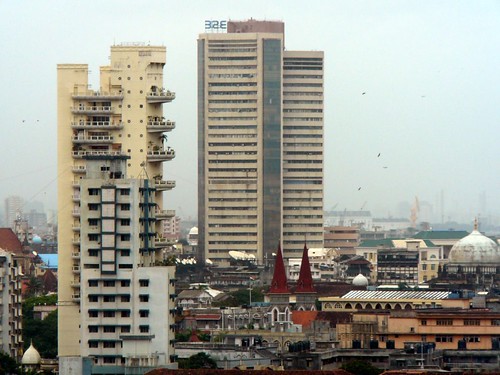
बंबई स्टॉक एक्सचेंज पीछे से

अब क्या होगा कालिया? (यहां से शेयर मार्केट कहाँ जायेगी?)
आर्थिक मंदी और मुद्रास्फीति अपना स्टेटस तो अब तक बदले हि नही| तो स्टाक मार्केट भी अपनी स्टेटस को नही बदलेगी| धीरे धीरे उपर जायेगी जब तक कि तब आम आदमी फिर से इन्वेस्ट करना शुरू करे|
Continue reading...